Saturday, December 16, 2006

Bartlestein's First Fling

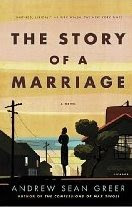
By Joseph Epstein, Commentary

LARRY BARTLESTEIN has played it safe all his life, and playing it safe has paid off. At sixty-four, he is a wealthy man, his two daughters are married, he has two grandchildren and another on the way, and he and Myrna will soon celebrate their 40th wedding anniversary. In his set of friends, this last fact is nearly worthy of Ripley's Believe It or Not. There were lots of early divorces, and a number more when couples reached their mid-forties. Some had still not settled in. Bartlestein read in Chicago Magazine last month that his high-school classmate Joel Meizels, the real-estate developer, had just forked over $40 million to his third wife. The figure made him whistle. The two earlier wives probably hadn't done much worse.

To Bartlestein, playing it safe came naturally. He had been a passably good student in high school, majored in business at the University of Illinois, taken and passed the CPA exam, and married Myrna Perelman, his high-school girlfriend, soon after graduation. Myrna, who had gone to the National College of Education in Evanston, taught grade school for the two years that it took Bartlestein to get his MBA at the University of Chicago. A job offer from Merrill Lynch followed, but it involved moving to Dallas. It was around then that his father-in-law made Bartlestein one of those offers not many people could refuse.

Perelman Plumbing is a major manufacturer of sinks, tubs, and faucets in the Midwest, one of the four or five largest in North America. Irv Perelman, the first Jewish licensed master plumber in Chicago, built the business out of a small warehouse on Western Avenue, near Diversey, after returning home from World War II. A genuinely modest man, he retained the thick, callused hands of a plumber, grime permanently encrusted under his fingernails.

"Larry," Irv Perelman said when his daughter told him about their prospective move to Dallas, "what's it going to take to keep you two here? I'd like the business to stay in the family, and Myrna's mother and I like having our daughters close by." Myrna's older sister Susan was married to a dentist in Highland Park.

"What do you have in mind?" Bartlestein asked.

"I was thinking about making you a vice-president in charge of the administrative side of the company, and eventually let you run the whole business if you turn out to be good at it. Starting salary of $50,000 a year."

In 1966, $50,000 was serious money, more than twice what Merrill Lynch was offering to move Bartlestein to Dallas. Besides, Myrna wasn't eager to leave Chicago. Why not, Bartlestein figured? He told his father-in-law he was grateful for the offer, and ready to give it his best effort.

Irv Perelman was of the my-word-is-my-bond school. He had no craving for power or status or glory, and he felt no need to bully or lord things over his son-in-law or anyone else. He just wanted to turn out a good product at a reasonable profit. His employees, who after five years became automatically vested in the company's profit-sharing plan, tended to stay put, many for their entire working lives. "No need to be a pig," he once said to Bartlestein. "Run this business right and everyone will do OK."

Bartlestein spent long hours mastering the details of the plumbing business. When Irv Perelman turned seventy-five and stopped driving, Bartlestein began picking him up on the way in from Northbrook. Most mornings, Irv read the Trib and then, after he put down the paper, the two generally talked business: investing profits, enlarging the plant, designing a new line, patching up troubles. After much careful effort, Bartlestein had gotten the firm's less expensive sinks and faucets into Home Depot, which turned out to be a shrewd move. His father-in-law treated him without condescension, as if he were a full partner, which is what he made him on his 50th birthday.

One morning, on the drive down, Bartlestein mentioned that he was thinking of getting a new car, a Mercedes. His father-in-law came alive. "Do me a favor," he said, "and buy another kind of car." Bartlestein asked why. Irv, who never talked about his wartime experiences, answered that even today he didn't like to think about it, but his battalion had been among the first to liberate the Jews at Treblinka. "I don't consider myself a prejudiced man," he said, "but the least I can do to keep the sights of those days out of my mind is not to have to drive to work with my son-in-law in a German car."

Bartlestein bought a Lexus. He continues to buy a Lexus, a new one every three years. He has come to think the Lexus is the perfect car for him: dependable, not too showy, efficient, quietly luxurious. He has himself become a kind of human Lexus.

AFTER THE death of Irv Perelman--at eighty-one, of a heart attack, early one morning at his desk Perelman Plumbing has continued as a family business, with Lawrence R. Bartlestein as chairman and chief executive officer. Bartlestein has invested both the company's and his own personal profits well. He has twice been president of Temple Jeremiah. He is among the major contributors in metropolitan Chicago to the Jewish United Fund, manufacturing division. He golfs at Bryn Mawr Country Club. Myrna, a better golfer than he, regularly wins the over-fifty women's title at Bryn Mawr. His daughter Debbie is married to a cardiologist and has two children Of her own. Jennifer, his younger girl, married a documentary filmmaker and is now, after two fairly traumatic miscarriages, in her eighth month. Her husband Charlie isn't making his nut, so Bartlestein helps out with a couple of grand a month.

At his annual physical less than two months ago, Bartlestein was assured by his internist that he is in excellent health. He does the treadmill and rowing machines at the East Bank Club, his weight is about what it should be, and all his numbers--cholesterol, blood pressure, PSA, and the rest--are good. Financially, medically, domestically, he is in the black, in the clear, sailing in calm waters.

So the question is, what is Lawrence R. Bartlestein doing in his office at 6:45 P.M. on a Wednesday night slipping his hand under the blouse of a young woman named Elaine Leslie, a designer at Perelman Plumbing? Elaine at this moment has her hand on Bartlestein's belt buckle, loosening it with what seem like very deft hands.

Only minutes ago, Elaine Leslie was standing behind Bartlestein's chair as he studied the designs and production costs for a new mid-priced line of faucets, a project she had brought in for his comments. He felt her hand touch his shoulder, then go upward, massaging gently, her fingers raveling the hair on the back of his neck. He pushed his chair away from his desk, and before he had time to say anything she slid smoothly onto his lap, and his arms were around her. Presently she will descend to do unbidden what Bartlestein, head of a company whose estimated worth is well over $100 million, has never quite found the nerve to ask his wife to do.

Bartlestein feels himself trembling slightly as Elaine, moving quickly, removes her blouse and slips out of her skirt. Now they are on the floor, Ms. Leslie (as Bartlestein persists in thinking of her) directing the show. Bartlestein feels oddly detached, hugely excited yet curiously outside himself, looking in. He recalls that he is a grandfather. He has had back trouble of late, and hopes he will not throw something out of whack before this session on his office floor is over. Until now, he has never in his life slept with anyone but Myrna.

Earlier this year, Bartlestein had lunch with Eddie Jacobs, who handles his account at Bear Stearns. Eddie's third wife is in her early thirties, and, Eddie confided, he is sexually very active. That was the slightly bragging phrase he used, "sexually very active." Bartlestein's own sex with Myrna is and always was decidedly less so. He enjoyed it, and tried to be a patient and in no way brutish lover; Myrna was without expressed complaint. But after the first year or so of their marriage, sex had never been at the center of their life. When their daughters arrived, and his responsibilities at the office increased, most of Myrna's complaints were about the hours he worked at Perelman Plumbing. Bartlestein's adult life has been lived through a very sexy age, and he has tried his best not to be swept up in the craziness.

Bartlestein and Elaine Leslie are now lying on the Oriental rug in front of his desk, she on her stomach, he still on his back. He looks at his watch: 7:18. The Polish cleaning women, he knows, come on at 9. Clothes are scattered across the floor. He is still wearing his T-shirt and black socks--"executive length," as the saleswoman at Marshall Field's described them to him. Now they remind him of those ridiculous movies shown at the stag parties he used to attend for friends on the night before their weddings.

"What exactly are we doing here?" he hears himself ask.

"I believe there are several names for it," Ms. Leslie answers.

"I guess I mean why are we here?"

"For pleasure," she says. "It pleased me. I hope it didn't displease you."

Bartlestein feels complimented. "I'm still not putting it right," he says. "How did we get into this position?"

"I got us into it, Larry," she said. "It's OK to call you Larry, isn't it? I thought you could use a little relief."

Relief, Bartlestein thinks: interesting word.

They dress, and Bartlestein asks if she would like dinner; he can tell Myrna he has to entertain a customer at the last minute. She says no, thank you, but since her car is in the shop, she would appreciate a ride home.

On the way, Bartlestein finds conversation awkward. He asks if she grew up in Chicago and she answers New York, but she has lived here for almost twelve years. "I still think of myself as a New Yorker," she adds. "Can't help it. Being a New Yorker is like being a member of an ethnic group." This makes Bartlestein wonder. Is she Jewish? Her name doesn't give much of a clue.

Bartlestein drops her in front of her large apartment building on Armitage, off Lincoln Park. No talk about his coming up; no mention of their getting together again. Looking back as she closes the car door, she says, "Thanks for the ride, Mr. Bartlestein," forgetting to call him by his first name.

DRIVING HOME, Bartlestein attempts to decipher Elaine Leslie's motives. He rules out simple sexual attraction, at least on her part. Although, like all men, he still checks out every woman in sight, and figures he will probably do so on his deathbed, there is nothing of the flirt in him. He is careful to send no signals to his female employees, and has certainly never sent any to Elaine Leslie, who was hired not by him but by his father-in-law. He is without illusions about his own attractiveness; women, he knows, find him perfectly resistible.

Perhaps, Bartlestein thinks, still searching for motives, she views sex with him as a way of getting ahead in the office? Blackmail is always a possibility. A wealthy man with a settled home life, Bartlestein has put himself in a position where Elaine Leslie could do him real damage. His mind racing, he conceives the possibility of an office pool, with the prize going to the first female employee to bang the boss. Who knows?

He thinks back to the day when, near high-school graduation, he and Myrna first made love--"going all the way" was the name for it then, a phrase, it occurs to him now, that assumed there was no way back. Having taken her virginity and in the same moment given up his own, he felt, rightly or wrongly, beholden to her. In those days the sex act was not only exciting but a matter of the deepest intimacy, implying trust on every level. There was nothing trivial about it. Now, for Elaine Leslie, it was a means of relief. Which was the better arrangement? Bartlestein hasn't a clue.

He is not disappointed to discover that Myrna isn't home. A note in the foyer tells him she has gone to her book-discussion group at Sue Levin's. There's lasagna in the fridge, with instructions for warming it in the microwave. She may not be home until after 11, and will try not to wake him. Bartlestein, who gets up at 5 A.M., is usually asleep by 10:30. The note, as always, is signed "Love, Myrna."

Eating the lasagna quickly, Bartlestein moves to the bedroom where he checks his shirt for lipstick and his clothes for perfume, and--always the safe player--showers before getting into bed. He is sure sleep won't come easily but it does, and without any of the anxiety dreams that have plagued him since he turned sixty.

In the morning, Bartlestein looks over at his wife, her face, even in sleep, shining with kindness. He and Myrna don't confide in each other regularly; there are many things, chiefly business worries, that Bartlestein keeps to himself. But their marriage is built on being able to count on each other, on never being a cause of embarrassment, let alone humiliation. What happened last night, if it were to come out, could only cause her both.

Usually they have coffee and toast together, but this morning he decides not to wake her. After he has shaved and dressed, he kisses Myrna gently on the forehead, and tells her he is leaving a bit early. "Love you," she says, pulling the covers up and falling easily back to sleep.

IN THE office, checking Elaine Leslie's file, Bartlestein learns that she is 23 years younger than he, is a graduate of the Pratt Institute of Design, earns just under $70,000 a year, and is divorced with no children. She has been with Perelman Plumbing for eight years. According to the reports of the people she has worked for, she is excellent at her job. She is also, Bartlestein reflects, good-looking, dark, petite, and vibrant. Not to mention fine in bed, or on the floor.

The question is how to erase what happened last night. These days you have to be very careful about letting someone go, even someone who royally deserves to be fired, which Ms. Leslie clearly does not. Screwing the boss hardly qualifies as a reason, especially when the boss has put up no fight whatsoever; more likely it qualifies as grounds for a high publicity sexual-harassment suit.

Earlier, driving to work, Bartlestein wondered whether he might arrange to have her lured away by another firm, perhaps even fix things so as to pay part of her salary. He is on friendly terms with Teddy Mohlner, head of a rival and larger plumbing firm. What if he confessed to Teddy his "indiscretion"--that is the word he decides he will use--and asked him to take Elaine off his hands by hiring her for $20,000 more than she is now making. He would come up with the additional money out of his own pocket. Once the deal was in place, he could tell Elaine he had heard Mohlner was looking for designers and was willing to pay up to $90,000. Was she interested?

But now Bartlestein thinks: what am I, nuts? Imagine confessing his problem to Teddy Mohlner. Imagine signing up to pay twenty grand or more a year for the foreseeable future, all for a quick roll on the floor. Talk about dumb schemes!

"Hi. Larry Bartlestein," he finally says to Elaine Leslie on the office phone. "I think we should probably have a talk. Are you free for dinner any night this week?"

"Tonight I can't," she says. "But tomorrow night's OK."

"Great," he says. "You know Erwin's, on Halsted? How about we meet at 7."

"See you there," she says.

Bartlestein's heart is racing. How the hell did he get himself into this? He sees scandal, lawsuits, a divorce, his careful life going down the tubes. The problem facing him is how to disengage smoothly, without bad feelings and worse consequences, but his mind floats off when he seeks a solution.

AT THE bar at Erwin's, it occurs to the waiting Bartlestein for the first time that maybe he doesn't really want to disengage from Elaine Leslie. Doesn't he deserve a little time off for an entire life of good behavior? He can afford a lady friend, and what with his long working hours and frequent business travel he feels reasonably sure he could arrange to bring the affair off. Maybe it makes sense to let this business unfold, wind down of its own accord.

Erwin's is a restaurant with good food and a fairly low level of pretension. Hoping that he won't be seen, at least not by friends or business associates, Bartlestein has scanned the room with care. Elaine Leslie is only a few years older than his daughter Debbie. Seeing them together, would someone take him for her father? Better that, he thinks, than for some old guy chasing young broads, a sugar daddy. As he ponders whether people use words like broads and sugar daddy any more, Elaine walks up to him at the bar.

She is wearing jeans, close-fitting, and a red cashmere cardigan over a white T-shirt. Her dark hair, cut short and brushed back, accentuates her delicate ears. On them she wears simple silver ball-shaped earrings; on her feet, moderately high heels. Her lipstick is darker than what she uses in the office. Noting these things, Bartlestein thinks that Myrna, who jokes about his obliviousness to her clothes and jewelry, would be amazed at his powers of observation. He also thinks he would have a hard time convincing anyone that this young woman, dressed for the attack, is a niece from out of town, or a business associate.

"I don't know this restaurant," she says. "Looks like a good place for a tryst. Or are trysts only in the afternoon?"

"Good place for dinner, actually," Bartlestein says, "and for talk. What're you drinking?"

She orders an apple martini, something Bartlestein has never heard of. From a small bag she takes out a white box of long, slender cigarettes. Lighting one for her, Bartlestein feels he is in a movie from the late 1940's, which, he reminds himself, is well before Elaine Leslie was born. In fact, everyone in the restaurant seems young to him: the fellow who asked for his reservation, the bartender, the woman who has shown them to their table, the waitress who recites the list of the evening's specials. After the first two specials, Bartlestein can never keep track. Elaine orders a veal chop, he the swordfish.

"So," Bartlestein begins, as the waitress goes off. "What do you see happening here?"

"Between us?" she says. "I kinda think that's your call."

"I'm a lot older than you, I'm your employer, I'm married, I'm even a grandfather."

"Really," she says. "I don't think I've ever slept with a grandfather before. I certainly never slept with my own."

Her jokiness puts him off, but he persists. "Why would you want to waste your time with me?" he asks.

"Think of me as Florence Nightingale," she says, lifting her martini glass--tall, with a blue stem--in a toast to herself. "I like the idea of bringing comfort to the wounded troops."

"Wounded?"

"Maybe not wounded. Maybe stifled. I don't know, but when I was standing behind you at your desk, I felt an overpowering sadness, as if you were a little boy who always did what he was told and didn't have all that much fun doing it."

"I don't think of myself that way at all," Bartlestein says. "I think of myself as a lucky man, in lots of ways."

"I'm only reporting what I felt," she says. "Funny: you say 'think,' I say 'feel.' Difference between men and women, I suppose."

When their food comes, Elaine's veal chop is enormous.

"They don't spare the horses here," Bartlestein says.

"Let's hope they do," she replies with her quick smile.

Bartlestein is impressed by the way she tucks into her food. Myrna, who worries about her weight, nowadays rarely eats anything but salads and fish, and never much of either.

"How do you eat like this and stay so slender?" Bartlestein asks after she has polished off the chop, the potato, the broccoli, and a large salad, and ordered a dessert of chocolate mousse and raspberries and a double espresso.

"The torture of exercise," she says. "The choice for me is simple: jog five times a week or buy my clothes at maternity thrift shops."

"Which reminds me to ask, if it's not too personal, how come you've never had children?"

"Pretty personal," she says. "My ex-husband turned out to be a child himself, and since he didn't show any signs of growing up, I didn't see much point in raising another one. There's another reason. I had an alcoholic mother. I'll spare you the details, except to say that my dad took off and left my brother and me in her very shaky care. When your own childhood has been a misery, you think hard before bringing more children into the world. At least I did. Still do, actually."

BARTLESTEIN FINDS himself touched by this young woman. He learns that her younger brother died in a car accident. She went to college on Long Island, to a school called Adelphi that he had never heard of. To help pay her way, she had waited tables. She wanted to be an actress, but auditioning made her too nervous. She had always been good at visual art, had an instinctive sense of design, and was able to get together a portfolio that won her a scholarship to Pratt. Her marriage, she tells Bartlestein, lasted four hellish years.

What Elaine described was a life lived pretty much on her own. How different from the case of Bartlestein's own daughters. Mostly thanks to Myrna, the girls had been carefully guarded and ushered through a gentle girlhood ending in safe marriages to Jewish boys of roughly their own background. They had been backed up all the way. Elaine Leslie flew solo, and was still doing so. Bartlestein admired that.

"You know," he says, driving her back to her apartment on Armitage, "we really haven't talked about the purpose of this dinner."

"You mean the purpose wasn't strictly nutritional?" she says.

"I mean where we're going."

"I think I'll let you decide that," she says. "I understand your situation is much more complicated than mine. If you want to put a stop to things now, we can do that, too."

"You're an amazing kid," Bartlestein says, pulling up in front of her apartment. "But maybe you already know that."

"I do," she says. "But it's nice to get reinforcement." She gets out of the car before he can come around to open the door for her. "Have to be up early," she says, looking in, "I work for a real tyrant. Thanks for dinner."

On the drive home, Bartlestein feels exhilarated, youthful, high and happy as he hasn't been for years--decades, really. He knows men whom he thinks of as terrific chaos managers. At the East Bank, he occasionally runs into Jack Meltzer, a friend from high-school days. On his fourth marriage, all of them to much younger women, Jack has twice declared bankruptcy, is in serious hock to the IRS, and at one point had mafia goons after him for too-slow payment of juice loans. Yet he shows no obvious traces of stress. At the club he still takes more than his share of shots at half-court basketball, flirts with women, tells jokes at which he himself laughs the loudest.

Bartlestein is not like that. If a shipment is delayed or profits are down by a half-point from last year, he can't sleep. How he has avoided ulcers is a mystery. "Know your limitations" was one of his father-in-law's great mottos, and Bartlestein, taking it seriously, had discovered his early on. He needs his risks to be carefully calculated, his days to be orderly, his life to be routinized. Take care of the details, he believes, and the larger matters will take care of themselves.

Are we talking about a mid-life crisis here, Bartlestein wonders? He had never put much stock in the notion. Men of a certain age become interested in younger women and want to drive around for a while in red convertibles. Not much crisis there, it seemed to him, just random desire conquering good sense. So isn't he entitled, too? At sixty-four he is already well past mid-life. Hasn't he earned a last--make that a first--fling?

Details, it is all a matter of details, and details are Bartlestein's specialty. If he could master the details of the sink-and-bathtub business, surely he can master the details of a relatively simple love affair without stirring up trouble. True, the stakes are high. If he is caught at it, Myrna will never again regard him in the same trusting way; she might even want a divorce. He will lose the respect of his daughters and their husbands.

Before he turns off the freeway at the exit for Dundee West, he has decided not to break things off with Elaine Leslie.

"LARRY," MYRNA says as soon as he enters the house, her voice shaking, "I've been trying to reach you for hours."

Bartlestein takes out his cell phone. He'd turned it off before going into the restaurant.

"What's the matter?"

"It's Jen. The baby was stillborn, strangled on its umbilical cord. She went to the hospital by ambulance, but it was too late. Larry, it's horrible. Almost full term, and now this nightmare." Tears are in his wife's eyes. She embraces him. She sobs, clutching at him. Bartlestein holds her, rubbing her back slowly in a circular motion. He tries to block out everything he has been thinking on his ride home. The thought crosses his mind that his own behavior may have had something to do with his daughter's misfortune.

Bartlestein does not think of himself as religious, but he leads his life as if cosmic justice prevailed. A man does good, and good is likely to be his reward. The reverse is also true--not always, not inevitably, but mostly. He knows there are thousands of exceptions, but somewhere firmly lodged in his mind is the certainty of cause and effect, of acts having roughly predictable consequences, of people getting what they deserve. Somewhere, an accountant keeps a fairly careful record.

"Dr. Oberman says that Jen isn't going to be able to have children, ever," Myrna says. "She's heartbroken. The hospital put in a cot, and Debbie is going to spend the night. Thank God Jen won't be alone."

Bartlestein's mind, usually so concentrated at moments of business crisis, is scattered. Despite himself, he can't help comparing his wife, her makeup ruined by tears, body slumped in grief, eyes red, exhausted by her daughter's suffering, with Elaine Leslie's youthfulness. He feels a perfect son of a bitch; and he feels his own age.

EARLY THE next morning at Highland Park Hospital, Bartlestein finds his daughter sitting in a chair near the window. Her older sister has gone home. Her mother is coming in later. Jennifer is his perennially troubled child. True, until now her troubles, though real enough to her, have been minor. She needed glasses, then braces. Her skin wasn't as good as Debbie's. She turned out to have a bit of a learning disability, and needed remedial teachers in grammar school and special tutoring later on. She sulked through adolescence, her sadness strong enough to send her to a therapist. She was unhappy with her nose--the Bartlestein nose, high-bridged, nostrils flared. Bartlestein didn't protest when Myrna said it should be fixed.

Nothing has seemed to go easily for Jen. Maybe because of this, Bartlestein loves her even more than her sister, though he tries never to show it. He loves her more because she needs him more.

"You OK, baby?"

"I'm OK, Daddy," Jen says, and her eyes begin to tear up.

"How's Charlie taking it?"

"He's been great. He's talking about adopting. I wanted my own children so much." All her efforts at bravery collapse, her head drops to her chest, she begins crying. "Why me, Daddy? Why always me?"

Bartlestein holds her, kisses the top of her head, rubs her back as he did her mother's last night, mutters over and over that everything's going to be all right. He feels her thinness through the robe. He stays for twenty minutes, holding his daughter's hand, neither of them saying much. He leaves after hugging her at great length, feeling inadequate.

Will this inability to have a child become the story of his daughter's life? Maybe he has raised both his girls too protectively. He has done everything he could to make them safe, has been the net over which they flew. Except they never really quite flew, not even Debbie; they never even quite got off the ground. They are conventional girls-decent enough, not mean or selfish, but in no way out of the ordinary.

But then, Bartlestein thinks, neither is he. Through cautiousness he has ventured little while gaining much. He has concentrated all his energies on his business: making and selling sinks and tubs and faucets. But what has he given up in return? Passion is what Bartlestein feels missing from his life. If he lived more by his instincts, he would already have begun to let his affair with Elaine Leslie play itself out, to see where it led. But he doesn't live by his instincts; he lives by rules, by repression and self-sacrifice, by fear of shame and worry about guilt, by what he has always taken to be moral principle. At the moment, he doesn't feel particularly moral.

On the floor of his Lexus, Bartlestein notices a small suede bag. Opening it, he discovers lipstick, a tweezers, a small mirror, a compact. It must belong to Elaine: lucky thing he didn't take his wife to the hospital. It's only a little past 7:30, so he decides to drop the bag off before Elaine leaves for work.

On the freeway, his cell phone rings. Myrna.

"What do you think?" she asks anxiously. "Is she going to be all right?"

"She's obviously very depressed. It's understandable enough."

"What terrible luck!" his wife says. "She wanted this baby so much."

"Rotten luck," Bartlestein agrees. "Crappy, crappy luck."

"We have to stand by her, Larry. Jen's going to need a lot of help."

"Right," Bartlestein says. "Look, babe, I'm just getting off the freeway. Call you later."

Bartlestein finds a parking spot half a block from Elaine's building. Ringing her up from the lobby, he's answered by a man's voice. Bartlestein says he has Elaine's cosmetics bag. The owner of the voice says she's out jogging but he'll come down to get it. A minute or so later, a young guy, tall, in shorts and a tank top, a baseball hat worn backward on his head, greets Bartlestein.

A relative of Elaine's, Bartlestein asks?

"No, a friend. Scott," the young man says with a smile, putting out a hand for Bartlestein to shake. He has large good teeth, very white. Bartlestein, a grinder in his sleep, has lost four teeth on the lower left-hand side and now wears a bridge.

"Thanks," the young man says. "I'm sure Ellie will be glad to have this." As he walks away, Bartlestein notes his long sun-tanned legs and athletic calves.

BARTLESTEIN GOES through his day, takes meetings, deals with suppliers over the phone, answers correspondence. Part of his plan is eventually to leave the business. He has thought he'd probably sell it to one of his larger competitors. What exactly he will do with the time available, he doesn't know. He'll find something.

Actually, until meeting Scott, he had been thinking that one of the things he might do was to show Elaine a few bits of the world in an expansive, expensive way. Now, he is thinking about his foolishness in imagining this could ever have happened. At a little past four, his secretary buzzes that Myrna is on the phone.

"Larry," she says, speaking quickly. "Bad news, but everything's OK."

"Myrna, be clear, please."

"Jennifer stuffed a fistful of pills down her throat. Thank God they got to her in time." Myrna is sobbing.

"My God!" Bartlestein says. "What do we do now?"

"I don't know," she says. "Please come home right away. I need you. We all do."

Bartlestein drives in a dark rain along the Kennedy expressway. Myrna's last words on the phone had been, "You're so good in emergencies, darling." Vaguely, he wonders if he will ever create an emergency or two of his own before he leaves the earth. But that is not his role. He tries, without much success, to imagine his daughter's despair as she grabbed and gobbled down those pills.

A list is forming in his mind as he turns off the freeway. He will press ten grand on his son-in-law to take Jennifer on a vacation once she has her health back. He'll find the best shrink in the city for handling this sort of post-partum problem, if post-partum depression is what Jen is going through. He'll call Marry Cohn, his lawyer, to see what he knows about adoptions in China, in Korea, in Guatemala, here at home. He'll look into the business of surrogate mothers; another lawyer he knows, Henry Waller, has made a minor legal specialty of this. Naturally he'll pay the expenses.

Tomorrow he'll call in Elaine Leslie. In his office he'll tell her that, pleasing as the prospect is, his life is too complicated just now for them to continue seeing each other. He'll mention serious family troubles, not going into any details. He will always be grateful to her, he'll say, leaving unspoken what, exactly, he is grateful for. What he is truly grateful for, he realizes almost with relief as he pulls into the driveway, is that she showed him a kind of life he is now certain he could never lead. He pauses for a second or two as the engine of the Lexus dies away, breathes deeply three times through his mouth, and heads for the house. It's a little past 5. Marty Cohn never leaves his office before 6:30. Might as well call him now, Bartlestein reasons, his spirits picking up.

Labels:

Saturday, October 28, 2006

10 Tips for Freelance Success

1 Show-that you care about your target markets
"Showing that you care" means understanding the publication you're writing for--and demonstrating that understanding.

Freelancer and former magazine editor Judy Keene explains: "When I was an editor, the quality I valued most--and found least--was an almost perfectly honed sense of my magazine's voice: its tone and point of view, our readers' needs, knowledge of previously run material, etc. I had a couple of freelancers who knew the publication and our audience almost as well as I did. When I saw a query from one of them, I knew before even reading it that I was going to find something absolutely on target. Barring something similar in the works, their assignment rate was close to 100 percent."

2 Be a team player
"For editors who ask reasonable things, I am more than willing to help out," notes freelancer Margaret Littman. "That's what you do for your co-workers in an office setting--and that's the way I think of editor/writer relationships. If I learn a fact or see an item that I think may be of use to that editor, regardless of whether or not I think it will turn into an assignment for me, I'll pass it along, just as I would in an office. Being willing to be a team player makes editors more likely to call me with assignments."

3 Stay in touch during the down times
Writer Elizabeth Johnson makes it a point to contact one of her editors even when she's not working on an assignment. "Every few weeks, I drop her an e-mail letting her know that I'm available. Sometimes she'll call me back in day or so with an assignment. Recently, she didn't have any assignments for me, but because she knew I was available, she passed my name on to another editor at the publication, who had a feature she needed to assign. If was a surprise story for which I wouldn't have been considered if I didn't keep in regular contact."

4 Follow up on your assignments
"When I e-mail a finished story to an editor, I always follow up a few days later just to make sure it was received, if I haven't heard anything," writer Dara Chadwick notes. "If I run into a potential problem on a story, I'll usually let the editor know way ahead of the deadline. Many times, I'm able to work around the problem and still meet the deadline. But I think most editors appreciate knowing."

5 Mind the details
Integrity and accuracy are the traits that keep many editors going back to the same freelancers. That means finding reliable, authoritative sources and checking facts.

"Notice the deadline," adds Meg Guroff, a feature editor at AARP The Magazine. "I know I'm supposed to say, 'Always meet the deadline,' but, frankly, most of the best writers I know have deadline problems. Writers who blow past the deadline without comment cannot be trusted with work in the future, but a chagrined phone call a day or two ahead saying the first draft will be a little late is not always a catastrophe."

6 Be patient
Many magazines receive hundreds of queries every week and don't always have staff available to review them. Holidays, sick days, vacations, office meetings and overall work flow all play a part in how quickly an editor can respond to a new story idea or a completed assignment. As a result, it can sometimes take six to eight weeks for an editor to get back to a writer just to say "No thanks." Sometimes--thanks to the internal approval process--it can take even longer to get a go-ahead. In such cases, patience is a virtue. Even so ...

7 Be persistent
Go-aheads also can take a while at AARP The Magazine. Guroff adds, however, "I'm much more likely to keep pushing [in-house on a writer's behalf] if the writer checks in periodically, without a hint of aggravation. Besides reminding me of their idea, this also demonstrates that the writer will be good at tracking down potentially reluctant sources. Same goes if you've turned in copy and haven't heard anything in a while." Don't be afraid to keep knocking, politely, until you get a response.

8 Be willing to revise
When writer Sal Caputo turned in his copy for a bridal magazine's new advice column for grooms, he learned he still had some work to do.

"Apparently, I was a little too irreverent," he says. "The editor wanted more Everybody Loves Raymond than Saturday Night Live. I took a deep breath and said, 'Let me take another crack at it.' When I handed in my revised version, the editor called to say that she and the publisher were exceptionally pleased with the column. It looks like I'll have a new steady gig with her magazine."

9 Offer something surprising (in a good way)
"Don't use all the good stuff in the query," freelancer Wayne Curtis suggests. "Leave out some fun surprises for the final piece." That way, your brand-new, well-polished manuscript won't feel like old news to the editor who has been living with your query for a month or two.

If he's really got a jump on his story, Curtis will sometimes surprise his editor by submitting his first 200 to 400 words a week or two before deadline, "just to give the editor some comfort and to allow the art department to start thinking."

10 Show that you care about your work
"We don't change things just for the sake of changing them," Guroff says. "So if a story comes back to you repeatedly with questions and changes, it's because it needs more work before it will fit well in our magazine. A writer who sees such feedback--or pretends to see it--as a chance to perfect the piece makes me happy. Someone who turns in a draft and says, 'Do what you want with it,' or tends not to know the answers to follow-up questions off the top of his or her head--indicating a minimum of curiosity about the subject--scares me."

Writer

Labels:

Thursday, October 26, 2006

What, Me Worry?

An industry leader explains how a climbing mishap helps him keep fear in check.

Paul Gagner, president of Sierra Designs and Ultimate Direction, wasn't always a corporate honcho obsessing over sales figures and marketing schemes. In July 1995, deep in the Canadian Arctic, he had more elemental concerns: He wondered if his climbing partner, Rick Lovelace, would eat him if he happened to die first.

They had just put up a first ascent on Walker Citadel, a 4,000-foot granite wall on Baffin Island. They called their 26-pitch climb Superunknown, which is exactly what they got into upon their descent. To their dismay, they found that the sea ice had broken up, blocking their intended over-ice hiking route back to the nearest settlement 70 miles away. stranded with antiquated maps and no radio, their survival was both a waiting game and a race against starvation.

BP How did you find yourself in such dire straits?

PG On all my other trips--the Himalaya, Alaska, Patagonia--there was always someone I could call for beta. For Baffin, there was nobody. I got some broad info from Conrad Anker, and that was it. Locals said it had been a warm spring and that the sea ice was melting, which shortened the window for our climb. Then with high winds, our climb took a week longer than expected. Our plan for returning to Clyde River was to ditch our climbing gear and hike across the frozen fjord. Our outfitter would pick up our gear after breakup, so no one was scheduled to come get us. Our plan B was to traverse the edge of the fjord, but the terrain was a minefield of crevasses. Our maps weren't accurate, and while we had a compass, we were so close to magnetic north that it didn't give us precise info. We had no GPS and no radio. We returned to basecamp hoping that when we missed our flights home, people would come looking.

BP Did you think you were going to die?

PG We waited for rescue for 2 weeks; one without food. I lost 20 pounds and felt like I was floating out of my body. We got pretty weak--it took all my energy just to pee. We took a photo of ourselves in front of our climb (see above) and joked it might be our last. Rick is stockier than me, and I asked "Hey, are you going to eat me if I go first?" We made light of it, but sitting there for 2 weeks, going through scenario after scenario, it could get grim very quickly if you let it. But we never really felt we wouldn't make it.

BP What did it feel like to hear the boat that finally rescued you?

PG A river near us made noise, which sounded to us like a boat engine. That was frustrating as hell. But this one time, the pitch was different, and it clicked: This is a boat. We bolted up, looked out the tent door, and saw three angels on a boat coming toward us. Relief. It made everything we'd been through feel worthwhile. The guys were hunters who spoke no English, but it was easy to communicate our gratitude--and our hunger. I'd been a vegetarian for about 6 years, and I was ravenously hungry. We had caribou stew.

BP What did you learn from this epic?

PG Be confident that there will be successful conclusions and make smart decisions toward that end. No freaking out! I tell my employees, "Look at El Cap; know that the goal is to stand on top of it. But break that down into stages you can attain." Right now, I'm working on restructuring our business in Japan, which I could really thrash around about--it's a big job. But you've got to look at a bite-sized goal first, like who our partners will be. Intense situations build character and stock your toolbox for real life.

By Shannon Davis, Backpacker

Labels:

Tuesday, October 24, 2006

The Vexing Success Of Avandia

Some 18 million Americans have Type 2 diabetes, and 41 million more are at high risk of developing the disease. A newly published study finds that the "at risk" group can cut the odds of developing diabetes by 60% if they take Avandia, a pill used to treat the disease. The results create a conundrum for doctors, however: Diet and exercise can lower the risk by the same amount, without the potential side effects of a daily pill. "But lifestyle changes have limited usefulness because so few people are willing to make them," says Dr. Jill Crandall, head of the diabetes prevention program at Montefiore Medical Center in New York. Avandia is made by GlaxoSmithKline, which also sponsored the research. For three years the study followed 5,269 patients in 21 countries with impaired glucose tolerance, half of whom were given Avandia.

Reporting in The Lancet, the researchers projected that 144 cases of diabetes could be prevented for every 1,000 pre-diabetics treated with the medicine. The patients on Avandia did have a slightly higher rate of congestive heart failure, which specialists said could limit its effectiveness. At about $170 a month, the drug could also be costlier than lifestyle changes. But as Crandall notes, insurance companies are more likely to pay for the drug than to cover the costs of a dietician or fitness trainer.

Copyright The McGraw-Hill Companies, Copyright 2006